
Childhood cancer is one of the scariest things parents can face, and the amazing specialists at Yale New Haven Children’s Hospital are an invaluable resource for families dealing with it. Michelle Foley, DO, is one of these accomplished doctors, seeing patients at Yale New Haven Children’s Hospital’s Pediatric Specialty Centers in Greenwich and New Haven. In addition to seeing patients, Dr. Foley is an assistant professor at Yale School of Medicine.
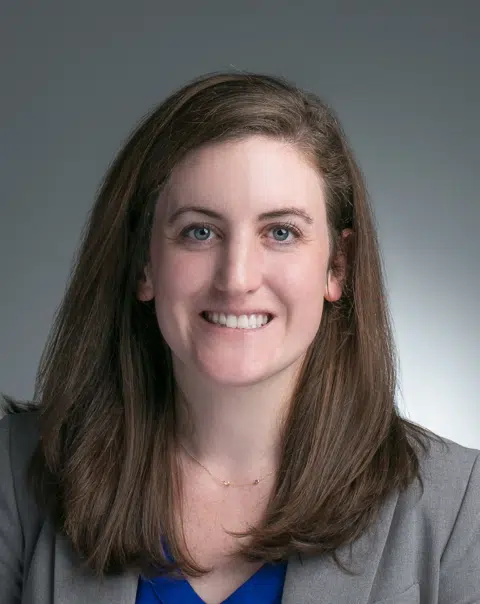
She and her husband live in Greenwich, having relocated, like many new parents, after their own son was born. “We chose Greenwich because of its convenience for commuting to New Haven and the city, as well as the diversity of restaurants, activities and proximity to family!” says Dr. Foley.
Below, she shares more about her specialty, what she wishes all parents would know about childhood cancers, and more.
Please tell us a little about your practice.
My main focus is childhood cancers, specifically leukemia and lymphoma; although I do take care of a wide range of blood disorders including iron deficiency anemia and platelet disorders. I chose this field because of the breadth of research happening in pediatric cancers as well as the strong relationships you form with patients and their family throughout treatment.
What’s your favorite part of your job?
My favorite part of my job is the lasting relationships that I build with patients and families going through treatment. Overall, oncology is a unique subspecialty in that it combines acute care with long-term care resulting in strong, lasting relationships. That being said, my favorite clinic days are end-of-treatment scans and bloodwork and sharing with patients and their families the joy of having successfully gotten through the months to years of treatment!

So wonderful! What is a typical day like for you?
My typical day is seeing patients with leukemia and lymphoma who can vary in age from 6 months to 21 years old. There are also a variety of benign hematology cases that I see throughout the day such as patients with low red blood cells from nutritional issues, and low platelets from a condition called ITP. The most common childhood cancer is acute leukemia, and the most common benign hematologic disorder is actually iron deficiency anemia (mostly from toddlers drinking too much milk!)
How do patients usually end up being referred to you?
Most referrals come from pediatricians. Typically, due to a concern about their patients or they see something abnormal in a patient’s routine lab work. Warning or red flag symptoms in a child can be persistent fevers that aren’t associated with an illness, large lymph nodes felt in the neck or armpits, extreme fatigue, easy bruising or bleeding, unexplained weight loss, and night sweats.
What else do you wish all parents knew about childhood cancer?
I think the big thing I want parents to know is for the most part, we don’t know why the majority of childhood cancers happen. Many childhood cancers are both incredibly rare and treatable, and our team is here to support families through an unimaginable time. The best thing that parents can do is listen to their gut and bring their child to their pediatrician if they’re concerned.
If a parent would like you to see their child, what is the best way to set up an appointment?
Our main appointment line is 877-YALE-MDS (877-925-3637). My email is [email protected] and I’m also happy to help with advice or setting up an appointment.
To learn more about Yale New Haven Children’s Hospital’s hematology and oncology programs, please visit Cancer (Oncology) & Hematology .